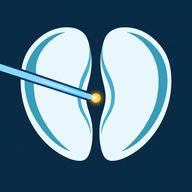
For some men, yes. Prostate cancer and benign prostate enlargement can coexist. If enlarged tissue blocks urine flow, HoLEP can ease urination. The decision also depends on whether the cancer is under active surveillance or radiotherapy is planned. [1] [2]
What can HoLEP address?
HoLEP uses a laser passed through the urethra to remove enlarged tissue from the inner part of the prostate. Its purpose is to open the passage for urine. It does not remove the whole prostate or treat prostate cancer. [1] [2]
A weak stream, straining and a feeling of incomplete emptying do not by themselves mean the cancer has progressed. Before considering surgery, the urologist checks whether the prostate is causing an obstruction. This may involve reviewing symptoms, measuring urine flow and using ultrasound to see how much urine remains in the bladder after urination. [2] [3]
When prostate cancer is under active surveillance
Active surveillance involves regular checks for selected men, usually with low-risk prostate cancer. The urologist uses PSA tests and, according to the surveillance plan, MRI and repeat biopsies to assess whether cancer treatment is needed. [4]
If benign enlargement is also making it difficult to pass urine, HoLEP can be considered during surveillance, particularly if medicines do not give enough relief or the bladder empties poorly. If the findings still support active surveillance, it continues after HoLEP. [1] [5]
What happens to PSA after HoLEP?
Benign prostate tissue also produces PSA. Removing some of that tissue usually lowers PSA. A lower PSA after HoLEP does not mean the cancer has gone. Once PSA settles after recovery, it provides a new baseline for future checks. The urologist interprets it alongside other findings. [4] [6]
When radiotherapy is planned
Difficulty passing urine or emptying the bladder should be assessed before radiotherapy begins. If there is significant obstruction, the urologist and radiation oncologist can consider whether HoLEP should come first. Prostate size alone is not a reason for surgery. [2] [7]
A retrospective study found more urinary complications when procedures to relieve obstruction were performed after radiotherapy than before it. These included urine leakage, narrowing of the urethra and inability to pass urine. The study included different procedures; its findings inform the discussion about timing but do not establish the best approach for every patient. [7]
How long should there be between HoLEP and radiotherapy?
There is no single interval for everyone. If HoLEP is planned first, the timing of radiotherapy should be discussed before surgery. The urologist and radiation oncologist consider how soon cancer treatment is needed, how recovery is progressing and how well the patient passes urine. Small studies show that external beam radiotherapy is possible after HoLEP, but do not establish the ideal interval. [2] [7]
My perspective
When a patient with prostate cancer tells me that passing urine is getting harder, I first want to find out what is causing it and how much it affects his life. I also review the plan for the cancer. If the patient is under active surveillance, I explain what the checks will look like after surgery. If radiotherapy is planned, I discuss the order of treatment with the radiation oncologist before proposing surgery.
HoLEP makes sense when it addresses a clear obstruction and fits into the prostate cancer plan. The best time to discuss urinary symptoms is while that plan is being made.
Sources and further reading
- Schober et al. — HoLEP during active surveillance
- Laughlin et al. — External beam radiotherapy after HoLEP
- Benign but burdensome — BPH during active surveillance
- EAU Guidelines on Prostate Cancer — Treatment
- Impact of HoLEP on active surveillance for prostate cancer
- Postoperative PSA kinetics after HoLEP
- Urinary outcomes after outlet procedures before versus after radiotherapy