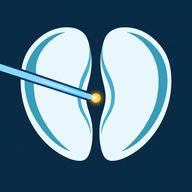
Rezūm is a minimally invasive treatment for symptoms caused by benign prostate enlargement. It uses the thermal energy of water vapor to reduce the tissue obstructing urine flow, without external incisions or a permanent implant.
It may be a suitable option for men seeking symptom relief and less reliance on medication, particularly when preserving ejaculation is important. The decision follows a urological assessment of the prostate, bladder function and treatment expectations.
Why choose REZUM, and how does it differ from other procedures?
- 🔹 High likelihood of preserving sexual function
– Preserved erectile function and a very low rate of retrograde ejaculation - 🔹 Can be performed under local anesthesia or brief sedation
– Also suitable for older patients or those at higher risk - 🔹 An outpatient procedure — only a few hours in hospital
– Usually no overnight stay, with gradual recovery - 🔹 Effective relief of enlarged prostate symptoms
– Significant improvement in urine flow and reduced urinary frequency - 🔹 A quick return to everyday activities
– Most patients resume their normal routine within a few days - 🔹 No incisions, stitches or scars
– Performed entirely through the urethra, without external incisions
How does Rezūm work?
Rezūm uses the thermal energy of water vapor to target enlarged prostate tissue that obstructs urination. The procedure is performed through the urethra, without external incisions, stitches or immediate removal of tissue by laser or electrosurgical resection.
Step by step
- Introducing the applicator through the urethra. A slim endoscopic applicator is introduced through the urethra under camera guidance. Local anesthesia or sedation is tailored to reduce pain and discomfort.
- Delivering water vapor into the prostate. Vapor is delivered through a fine needle into selected areas of enlarged tissue. Each application lasts about 9 seconds. The number and placement depend on the size and shape of the prostate; 4–6 applications may be enough for smaller or moderately enlarged prostates, while larger glands often need more.
- Targeted action of thermal energy. The vapor condenses in the tissue and releases heat, damaging cells in the treated area. The aim is to treat the tissue obstructing urination while preserving surrounding structures.
- Gradual absorption of treated tissue. Over the following weeks and months, the body absorbs the treated tissue. As it shrinks, more space becomes available for urine to flow.
- Gradual symptom relief. The effect develops during recovery, so improvement does not occur immediately after the procedure.
Who is this method suitable for?
Rezūm may be considered for men with a weak stream, difficulty starting urination, frequent urination or a feeling of incomplete bladder emptying, when an enlarged prostate is confirmed to contribute to these symptoms.
It may be particularly relevant for patients who:
- have insufficient improvement with medication or experience treatment side effects;
- want a treatment option without long-term medication use;
- wish to avoid adverse effects of TURP and other BPH procedures, including bleeding, hospital admission and retrograde ejaculation;
- place a high priority on preserving ejaculation;
- may benefit from a procedure under local anesthesia or sedation because of other medical conditions.
Prostate size is only one part of the assessment. Its shape, a possible median lobe, the amount of urine left after voiding, previous episodes of retention and the bladder's ability to empty are also important.
The choice is based on more than age or a preference for a particular procedure. The aim is to select a method suited to the patient's condition and overall health.
Has REZUM been clinically studied and included in official guidelines?
Yes. Rezūm has been evaluated in randomized clinical studies with long-term follow-up. The treatment is included in official professional recommendations from:
- The American Urological Association (AUA), which lists water vapor therapy as an option for symptoms caused by benign prostate enlargement.
- The UK's NICE institute, which recommends considering Rezūm for patients with moderate to severe symptoms and a moderately enlarged prostate, typically 30–80 ml.
These recommendations require appropriate patient selection following a urological assessment.
What are the results, and how long do they last?
In appropriately selected patients, Rezūm can significantly reduce symptoms and improve urine flow.
In the pivotal clinical trial, which included men with prostate volumes of 30–80 ml, symptom improvement was maintained for five years. The average reduction in the urinary symptom score was 48%, while additional surgery was needed in only 4.4% of patients.
This figure refers to additional surgery, rather than every possible need for medication or other treatment. Results from a single study do not guarantee the outcome for each individual patient.
Follow-up remains important after successful treatment. Some patients may develop symptoms again and need further therapy.
Rezūm or medication — what does VAPEUR-RCT show?
The randomized VAPEUR-RCT study compared Rezūm with a combination of two medications for an enlarged prostate — an alpha-blocker and a 5-alpha-reductase inhibitor — in 151 sexually active men.
After 12 months, the improvement in symptoms and quality of life was significantly greater with Rezūm:
| Outcome | Rezūm | Combination medication |
|---|---|---|
| Mean reduction in urinary symptom score (IPSS) | 10.8 points | 6.2 points |
| Mean reduction in the score measuring the impact of symptoms on quality of life | 2.7 points | 1.8 points |
A lower score indicates fewer symptoms and less impact on everyday life.
The trade-off: early, largely resolving urinary symptoms after Rezūm versus sexual and systemic adverse effects that may persist during combination medication therapy.
How should patients prepare for the REZUM procedure?
Rezūm is usually performed as an outpatient procedure, with discharge on the same day. Preparation is tailored to the patient's health and the planned anaesthesia.
Medical assessments and laboratory tests
Preparation includes a urological assessment to confirm that Rezūm is appropriate, together with basic laboratory tests: a complete blood count, blood biochemistry, urinalysis and urine culture. Depending on the findings, ultrasound, urine flow measurement, assessment of residual urine and additional investigations may be needed.
A preoperative assessment by an internal medicine physician and a consultation with an anaesthetist are part of preparation to evaluate overall health and select the appropriate anaesthesia. These are particularly important for older patients and those with chronic conditions.
Urine culture and antibiotic protection
A urine culture is required before the procedure. If bacteria are present, the doctor selects an antibiotic based on the culture and susceptibility results and determines when treatment should start. Depending on the findings, treatment may begin several days before the procedure. An active urinary tract infection must be treated before the intervention.
If the urine culture is negative, antibiotic prophylaxis is planned for the day of the procedure in accordance with the clinic's protocol. The choice of antibiotic also takes account of allergies, previous infections and regular medication.
Regular medication
All medications should be reported, especially those for high blood pressure and diabetes, as well as medications affecting blood clotting: aspirin, clopidogrel, warfarin and direct oral anticoagulants.
The doctor determines whether treatment should be temporarily stopped or adjusted and provides precise instructions for the day of the procedure. Patients should not stop medication on their own.
Food and fluids before the procedure
- Local anaesthesia without sedation: a light breakfast may be allowed, avoiding a large meal, according to the instructions provided in advance.
- Sedation with pain relief: the anaesthetist's fasting instructions must be followed. A minimum of 6 hours is usually required after a light meal, while different, shorter intervals may apply to clear fluids. The exact instructions depend on the patient's health and the anaesthesia plan.
Arrival at the clinic
Comfortable clothing is recommended. Patients should bring their medical records, laboratory results and medication list. If sedation is planned, an accompanying adult and transport after discharge should be arranged in advance.
Admission, the procedure and a brief recovery period usually require a total of approximately 4–5 hours at the clinic. The duration depends on preparation, anaesthesia and recovery.
What does the procedure involve?
Rezūm can be performed under local anaesthesia or sedation, while other forms of anaesthesia are chosen according to individual circumstances. Anaesthesia and medication are tailored to reduce pain and discomfort during the procedure.
The water vapour applications themselves take only a short time. The procedure is followed by monitoring and an assessment of readiness for discharge. Most patients go home on the same day with a temporary urinary catheter and written recovery instructions.
When can improvement be expected, and what is recovery like?
A catheter is usually placed after the procedure to allow the bladder to empty while the treated tissue remains swollen.
For patients who were able to urinate independently before treatment, the catheter is usually removed after a few days, often within 5–7 days. Timing depends on the prostate, the course of the procedure and bladder function.
Recovery and the treatment effect develop gradually. The timeframe varies between patients.
The first 7–14 days
Burning, frequent urination, urgency, a weaker stream, traces of blood in the urine or temporary urinary retention may occur. Urination may temporarily be worse than before the procedure because of swelling and healing of the treated tissue.
Around the third week
Some patients begin to notice improved urine flow and reduced frequency, including night-time urination — nocturia. Symptoms may vary from day to day.
Over the following weeks, up to approximately week six
Many patients experience less straining, a reduced need to urinate and better bladder emptying. The speed of recovery depends on the prostate, bladder function and the course of the procedure.
After approximately three months
The more pronounced effect is usually assessed after 2–3 months. In some patients, improvement continues for up to six months.
Clinical trials show that the benefit can be maintained for at least five years. Follow-up remains important because some patients later require additional treatment.
What can patients who already had a catheter before treatment expect?
In patients with urinary retention, the catheter is usually kept in place after Rezūm for several weeks, often around a month. The duration of catheterisation depends on:
- how long urinary retention was present before treatment;
- the function of the detrusor — the bladder muscle;
- prostate size;
- previous unsuccessful attempts to urinate without a catheter.
The first trial without a catheter is usually planned around four weeks after treatment, based on an individual assessment:
- if the patient urinates successfully and the bladder empties adequately, the catheter is removed;
- if urination is still not possible or emptying is inadequate, the catheter is reinserted and another trial is planned after further recovery.
In selected patients with urinary retention caused by an enlarged prostate, Rezūm may allow a return to independent urination. In one published clinical study, successful catheter removal and a return to independent urination were achieved in approximately 70% of patients.
Success also depends on the bladder muscle's ability to contract and expel urine. Relieving the obstruction at the prostate cannot always compensate for severely impaired bladder function.
An unsuccessful first trial does not necessarily mean that treatment has failed, but some patients continue to need a catheter or an additional intervention.
What are the possible adverse effects of the REZUM procedure?
Rezūm is minimally invasive but can have adverse effects. The most common symptoms during recovery are mild or moderate and temporary.
Common temporary symptoms
- burning or pain when urinating;
- frequent urination and urgency;
- a weaker or intermittent stream;
- traces of blood in the urine;
- mild pain in the lower abdomen or perineum;
- a small amount of discharge or blood around the catheter at the urethral opening.
These symptoms usually gradually ease over 2–4 weeks. Some may last longer; blood in the urine can appear intermittently for several weeks.
Less common adverse effects
- temporary inability to urinate, which may require reinsertion of a catheter;
- urinary tract infection, particularly with prolonged catheterisation;
- changes in ejaculation, such as reduced semen volume or absence of ejaculate.
In some studies, changes in ejaculation were reported in approximately 5–10% of patients, with variation according to the type of change and the follow-up method. This risk is lower than with standard TURP.
Frequently asked questions
Does Rezūm preserve sexual function?
One of the main advantages of this method is the high likelihood of preserving ejaculation. Erectile function is usually maintained, making Rezūm an important option when the sexual aspects of treatment are a priority.
However, reduced semen volume, absence of ejaculation or other sexual difficulties can occur. Preservation of function cannot be guaranteed in advance for every patient. Erection, orgasm and ejaculation are distinct functions and are discussed separately during consultation.
Can involuntary urine leakage occur?
Persistent incontinence after Rezūm is rare.
Urgency and temporary urine leakage may occur during recovery and should be distinguished from a lasting loss of urinary control. If leakage develops, the doctor assesses its cause and whether further treatment is needed.
Can it be used for larger prostates?
Clinical data are also available for prostates larger than 80 ml. In the United States, the indication for Rezūm was expanded in 2025 to include volumes of up to 150 ml.
However, this limit does not mean that every prostate of that size is suitable for treatment. Assessment includes anatomy, the degree of obstruction, bladder function and other treatment options. The longest follow-up from the pivotal randomized trial relates to prostate volumes of 30–80 ml.
How is the choice between Rezūm and HoLEP made?
Rezūm and HoLEP work differently. Rezūm gradually reduces treated tissue using water vapour, while HoLEP uses a laser to separate and remove the tissue obstructing urination.
Rezūm may be considered when preserving ejaculation is a high priority and the findings are suitable for this method. HoLEP is an important option when more extensive removal of obstructing tissue is needed, including in large prostates. Changes in ejaculation are common after standard HoLEP, while erectile function is usually preserved.
During consultation, the expected effect, speed of improvement, anaesthesia, recovery, sexual outcomes and potential need for further treatment are compared. The choice should reflect both the clinical findings and the patient's priorities.
Does Rezūm treat prostate cancer?
Rezūm is intended for symptoms caused by benign prostate enlargement. It is not a treatment for prostate cancer. If examination and test results raise suspicion of malignancy, appropriate diagnostic assessment is needed before treatment decisions are made.
Recommendations after the procedure
Rest is recommended during the first few days, with a gradual return to light activities. Strenuous exercise, heavy lifting, cycling and sexual activity should be postponed according to the doctor's instructions and the progress of recovery.
Patients should take prescribed medication and drink fluids as advised, taking any heart or kidney conditions into account. Coffee and alcohol can increase urinary frequency and urgency and should be limited during recovery.
If a catheter is in place, the patient receives instructions on hygiene, maintaining free urine drainage and the planned removal date.
When should a doctor be contacted immediately?
Patients should seek medical advice without delay if any of the following occur:
- fever or chills;
- severe or increasing pain;
- inability to urinate after catheter removal;
- heavy bleeding or blood clots in the urine;
- urine stops draining through the catheter, especially with pain and pressure in the lower abdomen;
- the catheter falls out.
Assessment for Rezūm therapy
A consultation with Dr Uroš Bumbaširević allows an assessment of whether Rezūm is the right option or another method could provide a better result. The treatment plan is based on clinical findings, overall health and the patient's expectations.