The VAPEUR study, published in 2026, directly compared Rezūm with combination drug treatment. Its results provide new evidence for discussing treatment choices. [1]
About the VAPEUR study
VAPEUR is a randomised study involving 151 sexually active men. Patients were randomly assigned to Rezūm or a combination of two types of medicine for benign prostate enlargement. The published results cover one year of follow-up. [1]
The study concerned men who still had symptoms despite previous treatment with an alpha-blocker. It is therefore particularly useful for discussing the next step when one medicine does not provide satisfactory relief. [2] [5]
How do medicines and water vapour work?
Combination treatment in this study involved:
- An alpha-blocker, which relaxes smooth muscle around the prostate and bladder neck and can therefore ease urination relatively quickly.
- A 5-alpha-reductase inhibitor, such as finasteride or dutasteride, which gradually shrinks the prostate. Its effects develop over months and, in suitable patients, it also reduces the long-term risk of urinary retention and the need for surgery. [3]
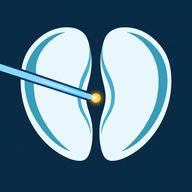
Rezūm uses the thermal energy of water vapour, delivered into enlarged prostate tissue through an instrument passed along the urethra. The treated tissue then gradually shrinks, which can ease urine flow. Improvement develops during recovery rather than immediately after the procedure. [4]
Results after one year
Both groups improved, but the improvement was greater after Rezūm.
The average reduction in the IPSS score, a questionnaire used to assess urinary symptoms, was:
- 10.8 points after Rezūm;
- 6.2 points with combination drug treatment.
A lower score means fewer symptoms. The Rezūm group also had a greater improvement in quality of life. [1]
For patients, treatment success should also be judged by how much urination disrupts daily activities and how satisfied they are with the improvement achieved.
Sexual function
Preserving sexual function is an important part of the treatment decision for many men. It is useful to distinguish between erections, sexual desire and ejaculation, the release of seminal fluid.
Sexual function was generally preserved in the Rezūm group. The results are encouraging, but they do not guarantee preservation of every aspect of sexual function in every patient. [5]
Medicines can have sexual side effects: some alpha-blockers affect ejaculation, while finasteride and dutasteride can affect desire, erections or ejaculation in some men. [3]
Recovery and risks
Rezūm is usually performed as a day-case procedure. A catheter is usually needed for a few days afterwards. Burning, frequent urination, discomfort and blood in the urine may occur, while the full effect develops gradually. [4]
In VAPEUR, treatment-related adverse events were more frequent with Rezūm: 40% versus 28% with medicines. Events classified by the authors as serious were recorded in 12% versus 1.3% of patients. [1]
Common milder symptoms after Rezūm are usually temporary and settle over the first few weeks, generally within the first month. This recovery pattern was reported in earlier studies of the procedure. [6]
With medicines, side effects may persist during long-term use, creating a longer-lasting burden for some patients. These different treatment courses should be discussed before making a decision. [5]
Choosing treatment
These results may be particularly relevant to men who still have significant symptoms, wish to consider an alternative to long-term combination drug treatment and regard sexual function as an important priority.
Assessment includes prostate size and shape, symptom severity, bladder emptying, general health and the patient’s expectations. Medicines remain an appropriate choice for many men, while others may benefit more from a procedure. [3] [4]
My perspective
For me, the greatest value of VAPEUR is that it addresses a real dilemma for a patient who already takes a prostate medicine but remains dissatisfied with urination.
I believe treatment options should be discussed when symptoms begin to significantly disrupt daily life. Patients should understand what adding another medicine might offer, what Rezūm involves and what recovery after the procedure is like.
I see Rezūm as an important option for carefully selected men who want better symptom relief, are considering reducing long-term medication and value preservation of sexual function. At the same time, I want them to understand the possible risks and the gradual development of the treatment effect.
My aim is to connect the findings with what truly matters to the patient: easier urination, an acceptable recovery and quality of life. The study helps us have this discussion using new evidence while assessing each patient individually.
Sources and further reading
- VAPEUR — randomised comparison of Rezūm and combination drug treatment (2026)
- ClinicalTrials.gov — VAPEUR study design and eligibility (NCT04838769)
- EAU — guidelines on the management of male lower urinary tract symptoms
- BAUS — patient information on Rezūm
- Jean-Nicolas Cornu — discussion of the VAPEUR results
- Earlier randomised Rezūm trial — results and temporary symptoms during recovery (2017)